
GARDEN BLOCKS – CHILD CARE CENTRE
It’s important to note that this child care facility is meant to be replicated repeatedly on elementary school properties with ample land. These child care centres aim to address a community shortfall; as such, these institutions are in high demand due to current societal pressures that often require both parents and/or single parents to work outside the home.
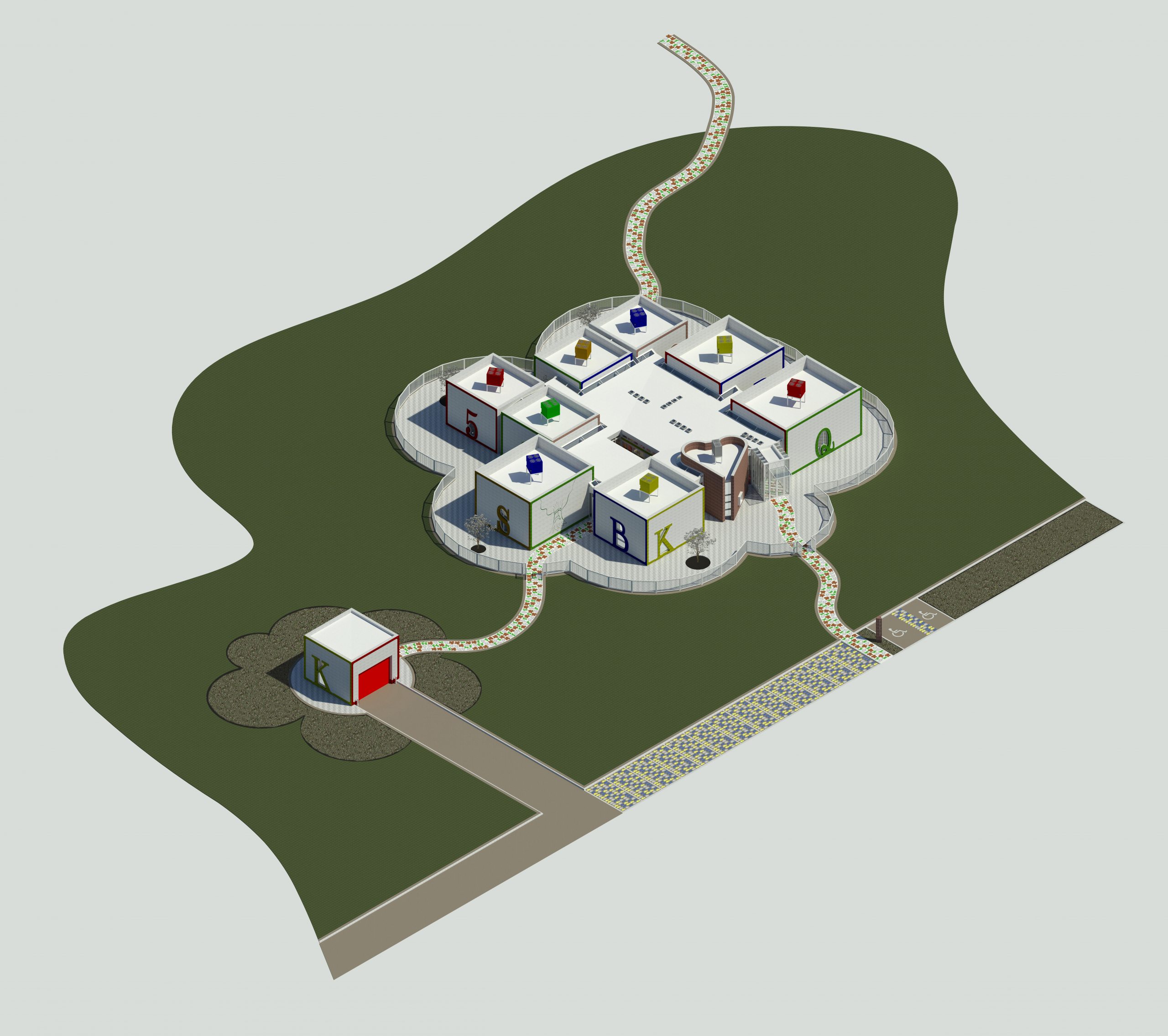
The child care centre comprises numerous classrooms for infants to preschoolers, and is combined with other support facilities (office, staff room, kitchen, laundry, outdoor garbage room and children’s washrooms), forming the bulk of the project. This building program, when viewed as a whole, is meant to be understood as a “kit of parts” that can be rearranged and recombined in various ways to suit the grade school land available.
As this child care centre would inevitably become the first institution these young children attend, a fundamental architectural question arose, which would guide all our thinking going forward: How does one go about designing an architecture, an “architectural language” that provides meaning to a child, when the eldest of them is just four years old?
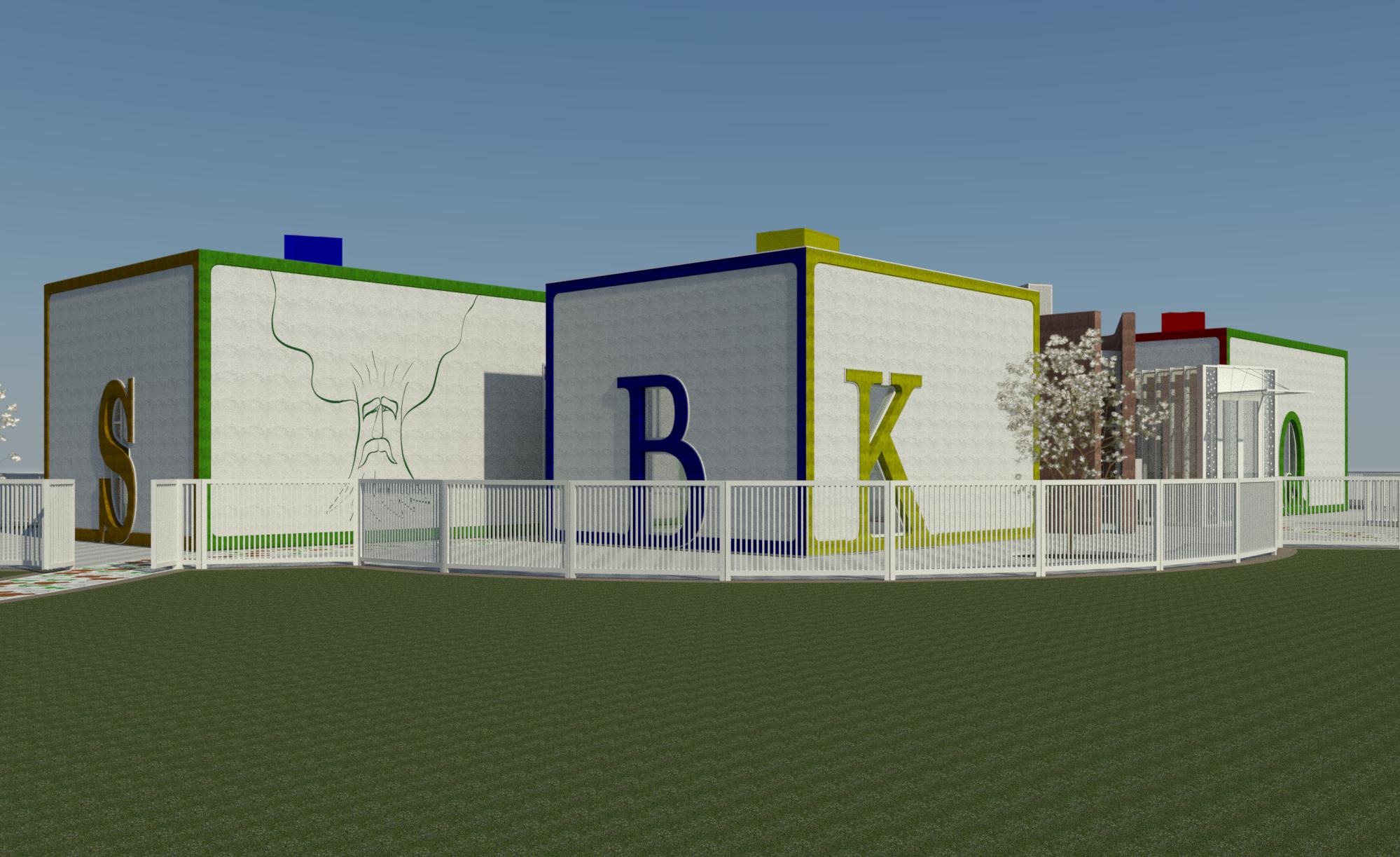
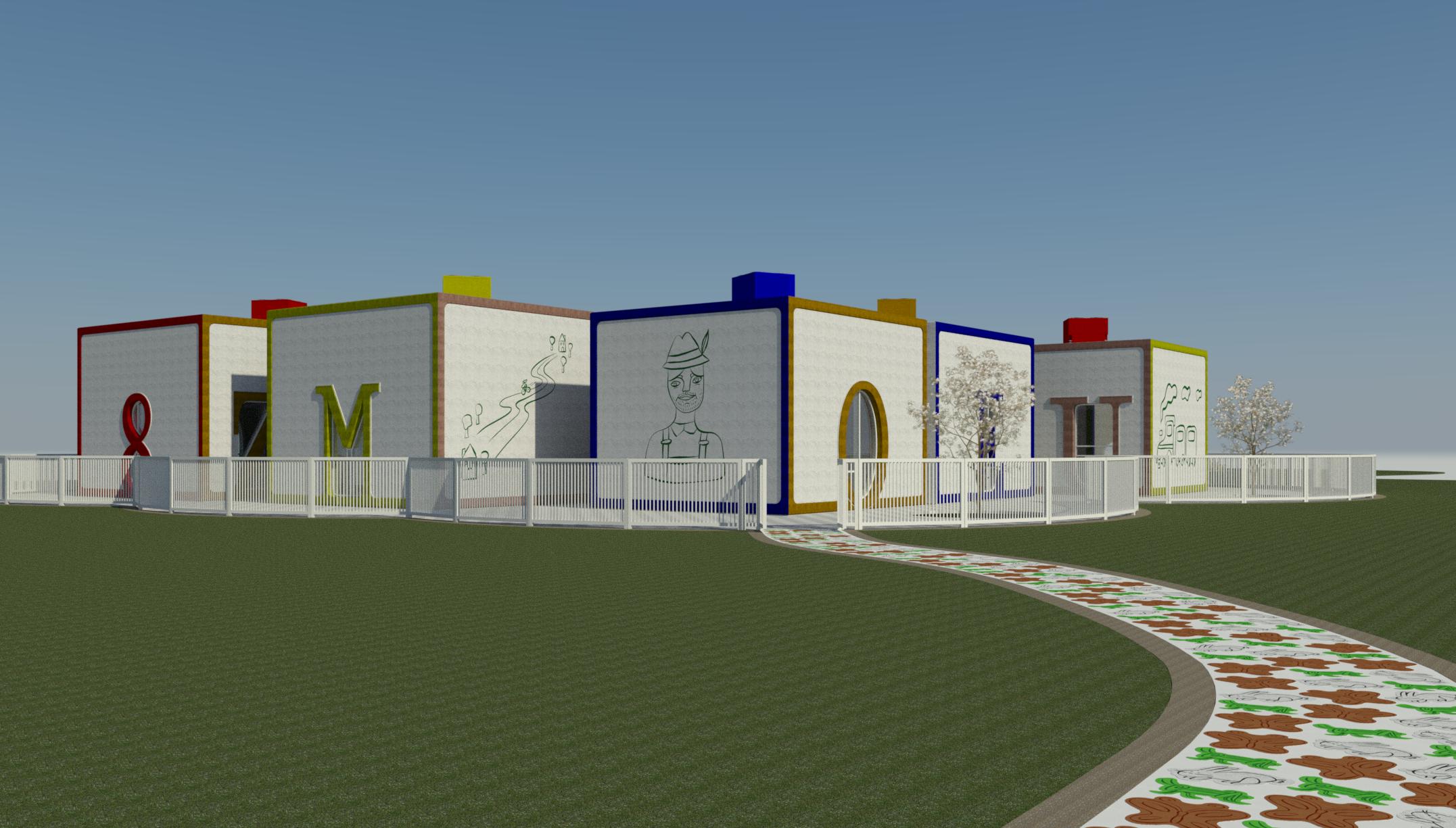
Drawing inspiration from toy blocks, a common tool in preschool learning that promotes and teaches the basics of construction and creative thinking, we enlarged these familiar blocks into building-sized components, making the small block big – a concept we believe children would easily understand. Many of us can recall the joy and surprise from this kind of “scale play” in both the literary classic, “Gulliver’s Travels,” and the film “Time Bandits,” both of which are cherished by children.
This type of “scale play” appears in contemporary art as well, as shown by Swedish American artist Claes Oldenburg. His oversized sculptures of everyday objects (such as a spoon, badminton bird, binoculars, handsaw, etc.) captivate viewers and often bring a smile.
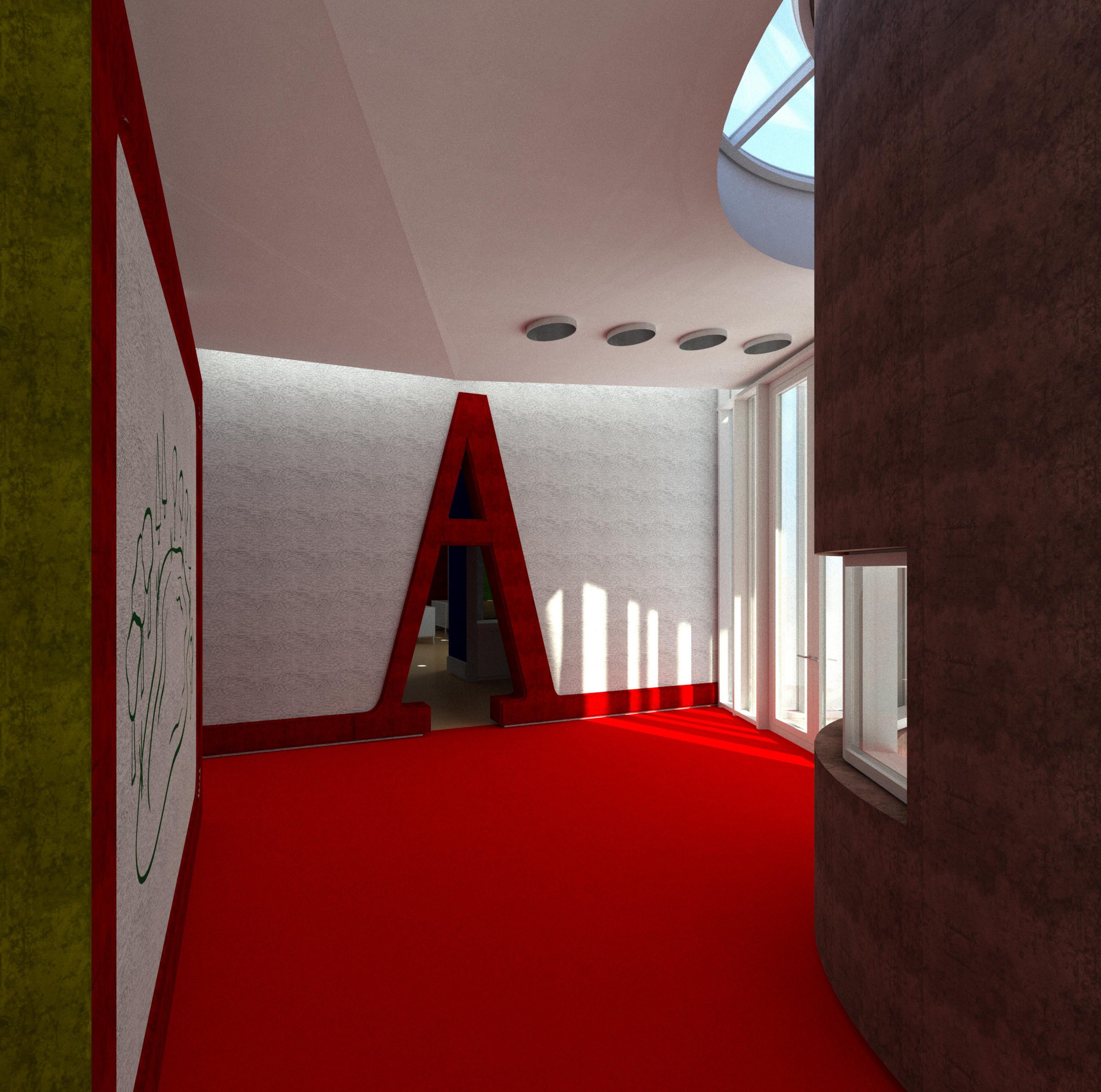
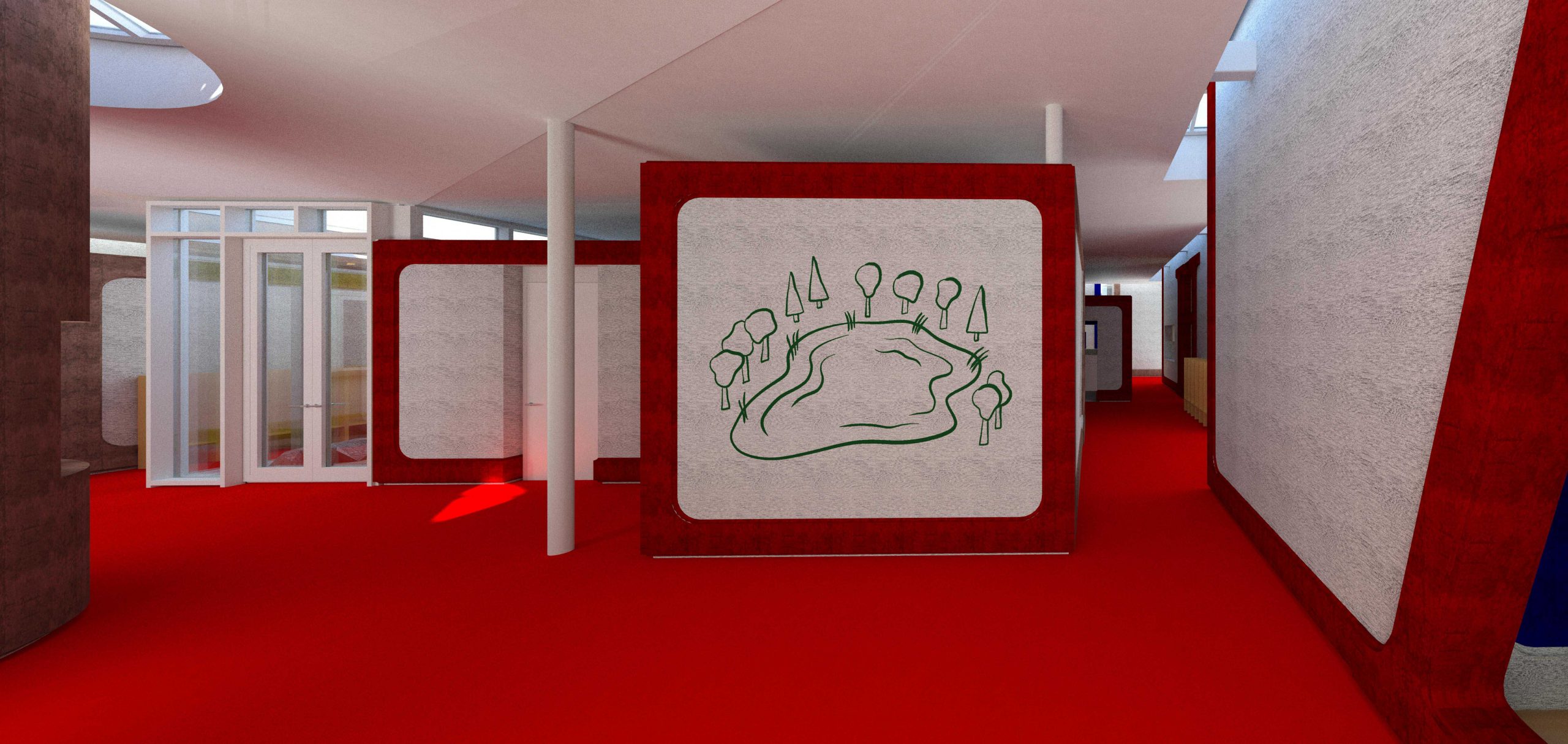
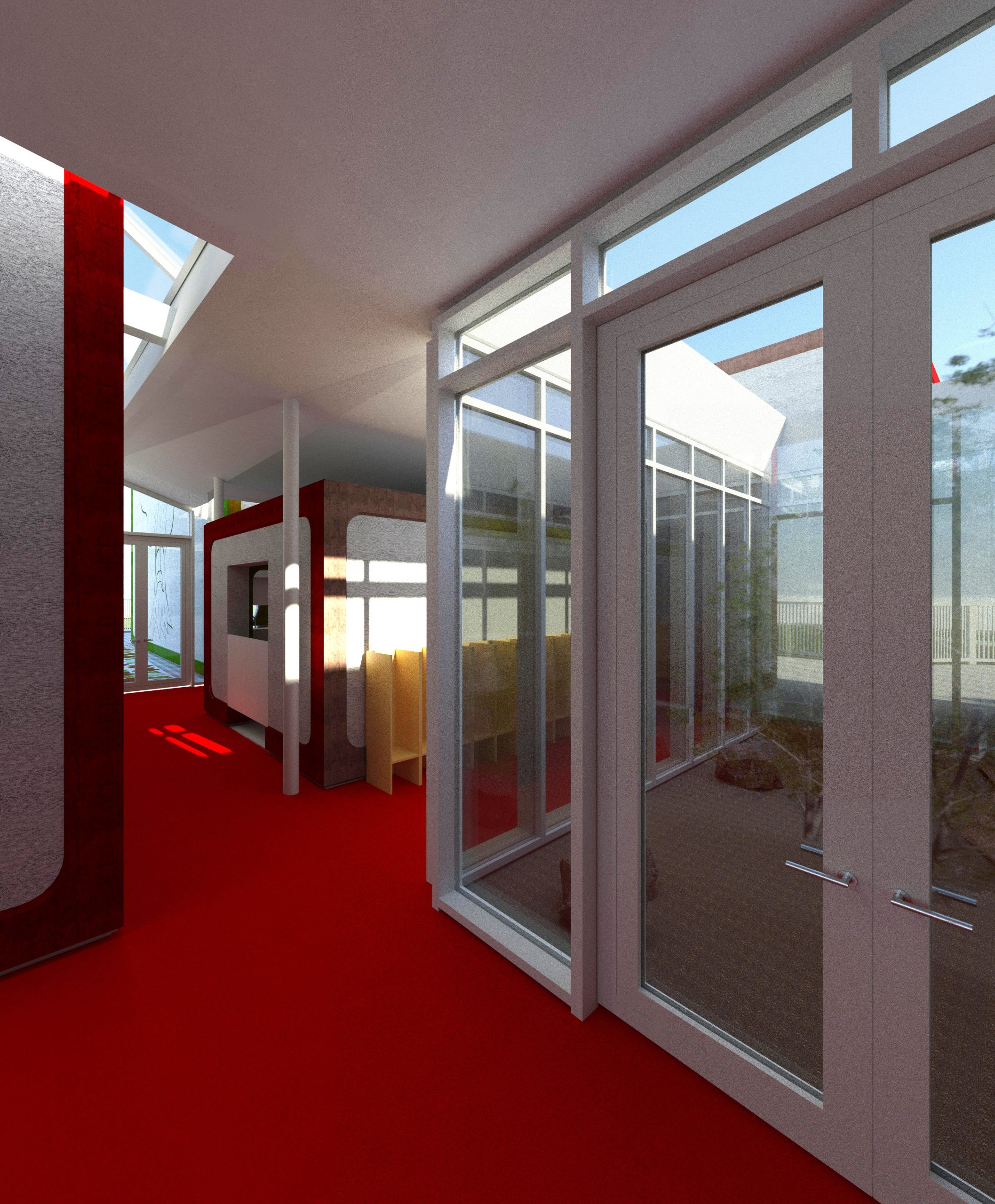
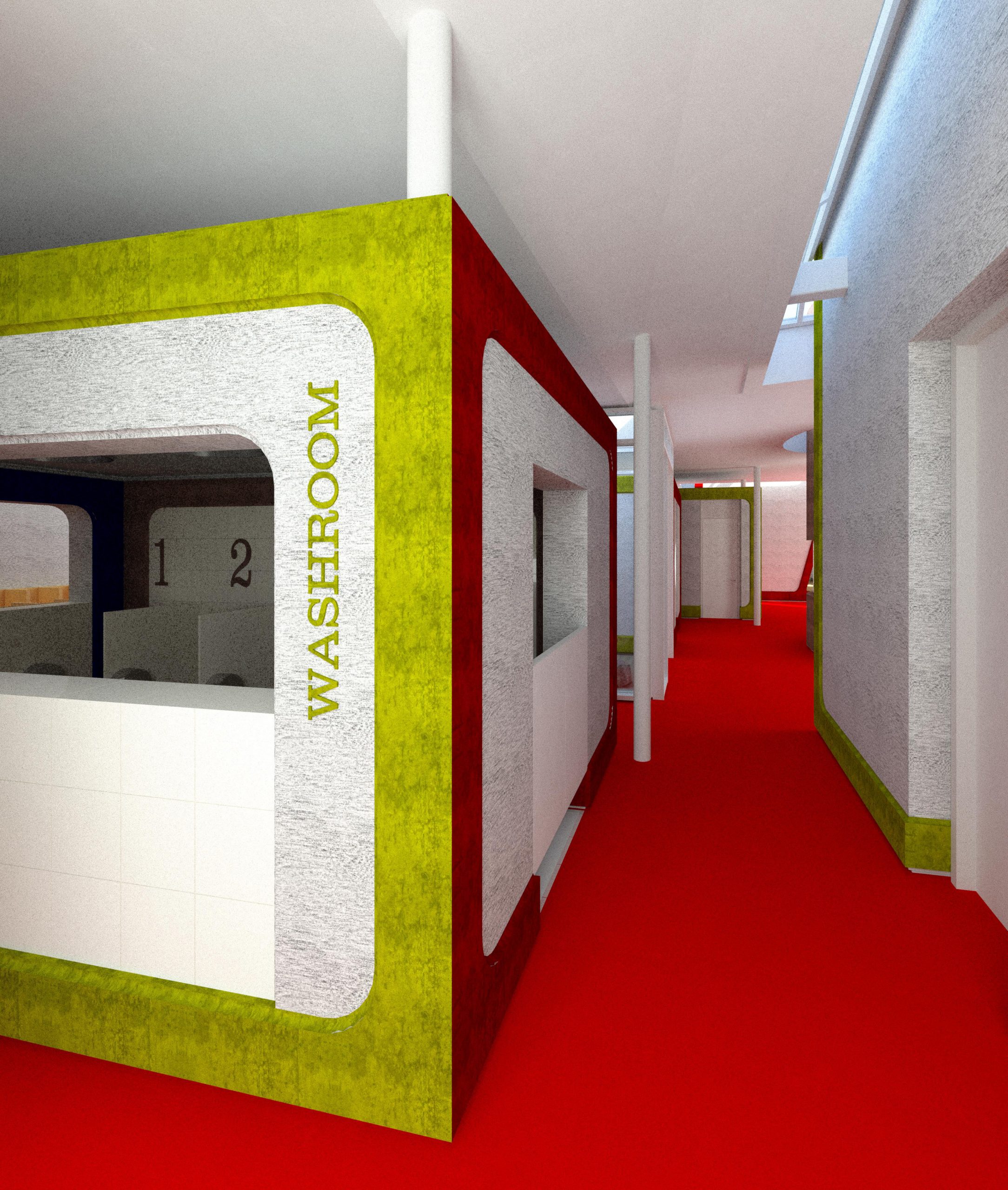
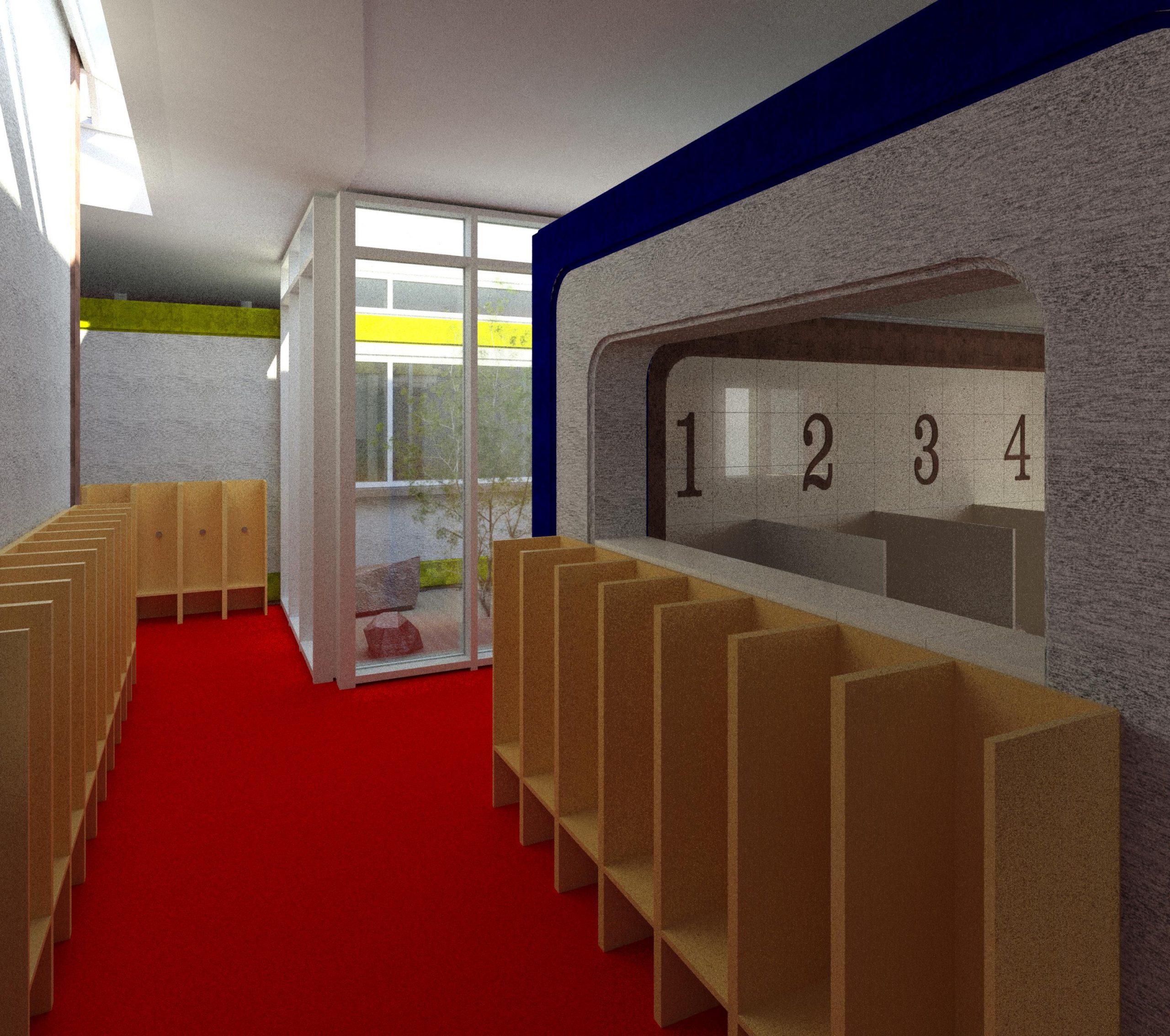
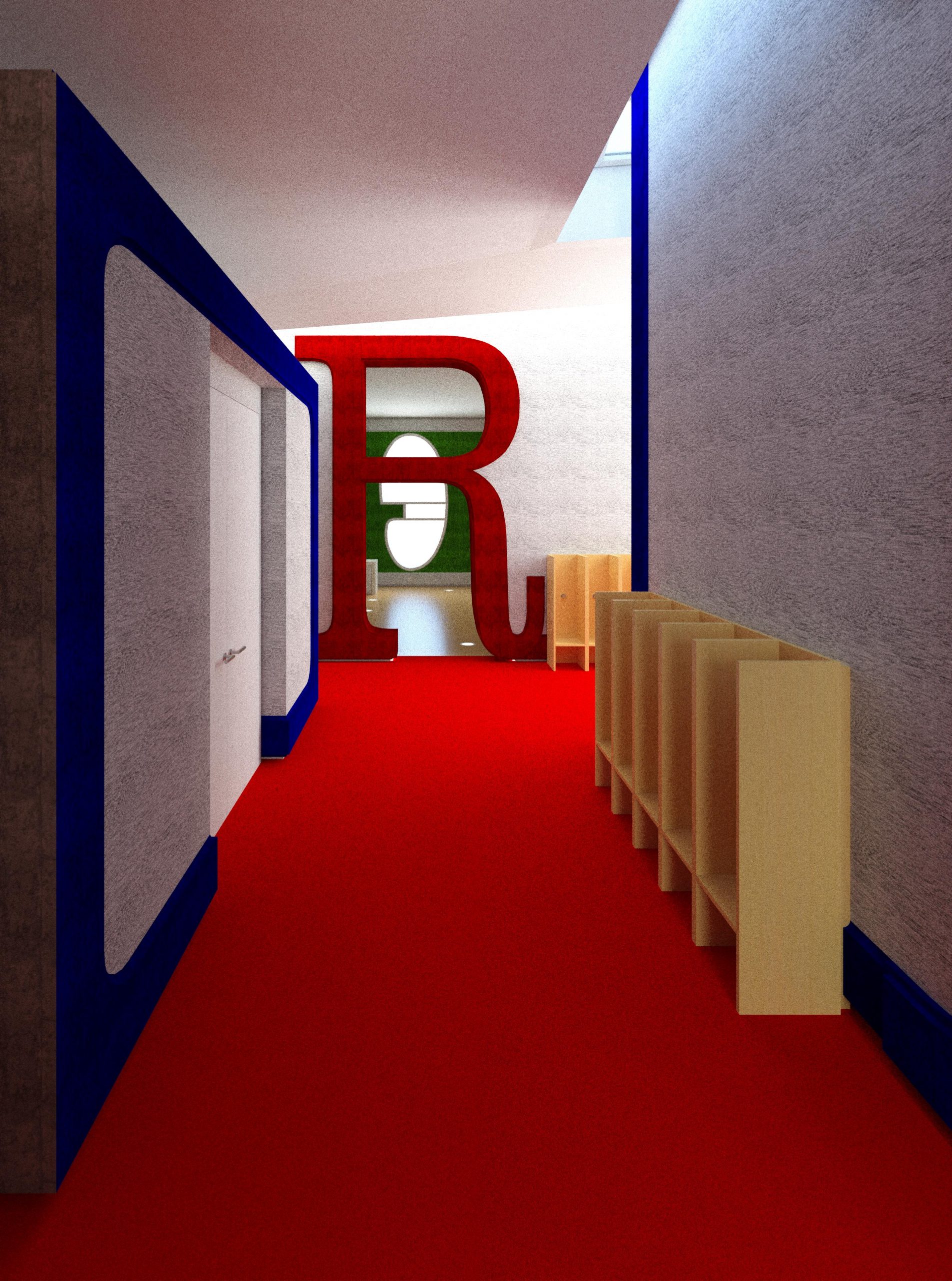
With the “architectural language” of the child care centre now consisting of giant toy blocks, each block was then assigned a specific program. Compositionally, these blocks were arranged in a somewhat random order, resembling a child-sized “village,” with the spaces between the blocks serving as indoor “streets.” The smaller blocks within the “village” contain shared facilities, such as the kitchen and laundry areas, as well as the all-important miniature children’s washrooms.
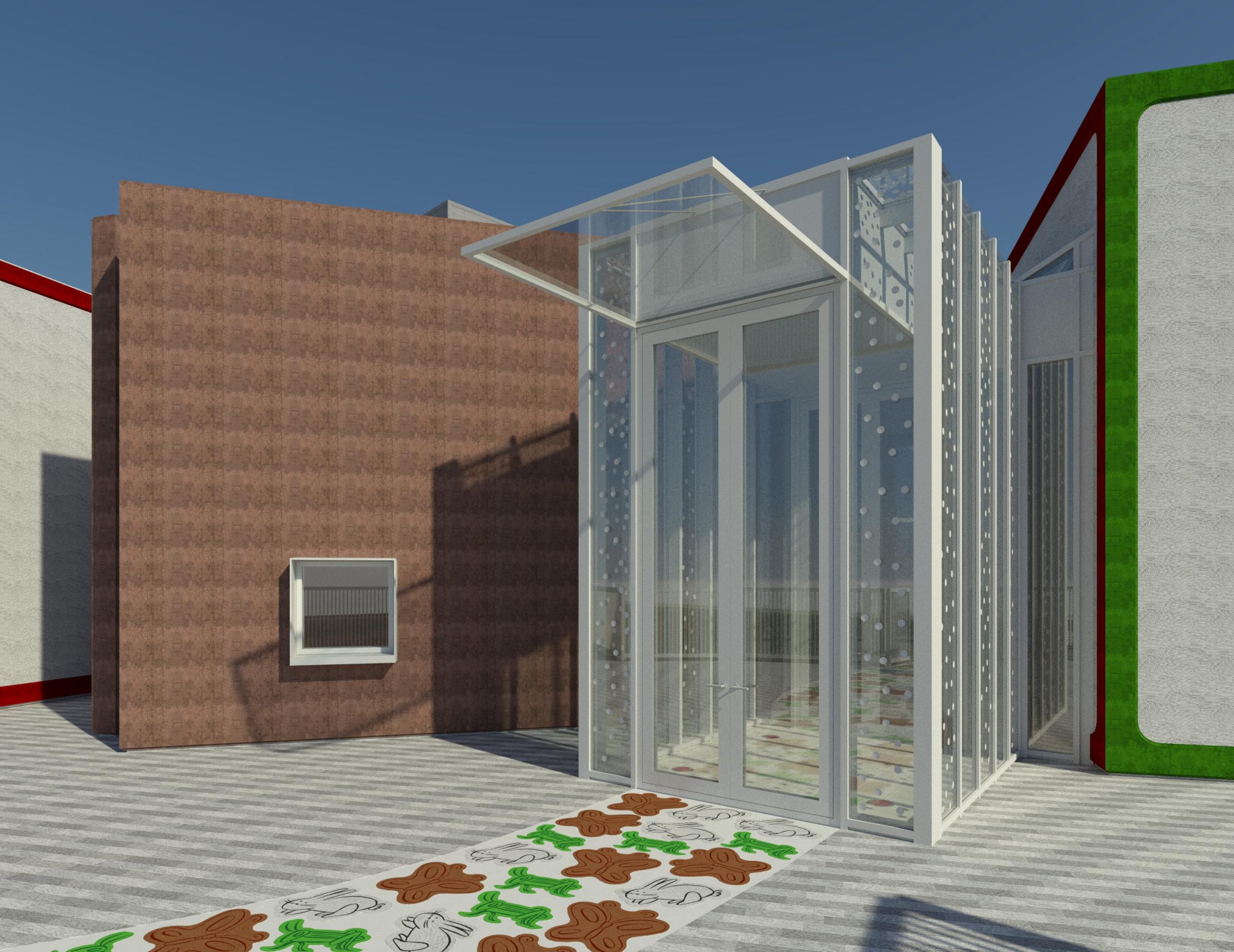
Within the “village,” specialized blocks were placed, identifying unique programs in the building. The first of these is the main entrance foyer, which was designed to resemble a large “gift wrapped box,” but expressed entirely in glass. The concept is that when a child is standing inside this “gift wrapped box,” the child can be seen as the “gift” within it, highlighting the importance of each individual child. Moving past the foyer, one arrives at the office, which is expressed like a giant heart-shaped candy, a “sweet tart,” symbolic of the love the faculty and office staff have for these precious young children.
With the child care centre being primarily white – its whiteness symbolizing children’s innocence – colour is then boldly added to this innocence. The colouration on the exterior of the building takes its cue from the toy blocks that inspired them.
Starting with a colourful “frame” that traces the block’s outer surface and a “letter” or “number” set within it, both in the same colour, the block’s expression varies from side to side. Thus, as one moves around the building, its facades display a constantly changing “colour”, “letter” and “number”. Even the rooftop mechanical units participate in this collage of colours as the units above, are exposed (not screened) and given bold, complementary colours, providing an honest visual expression of the building’s mechanical workings.
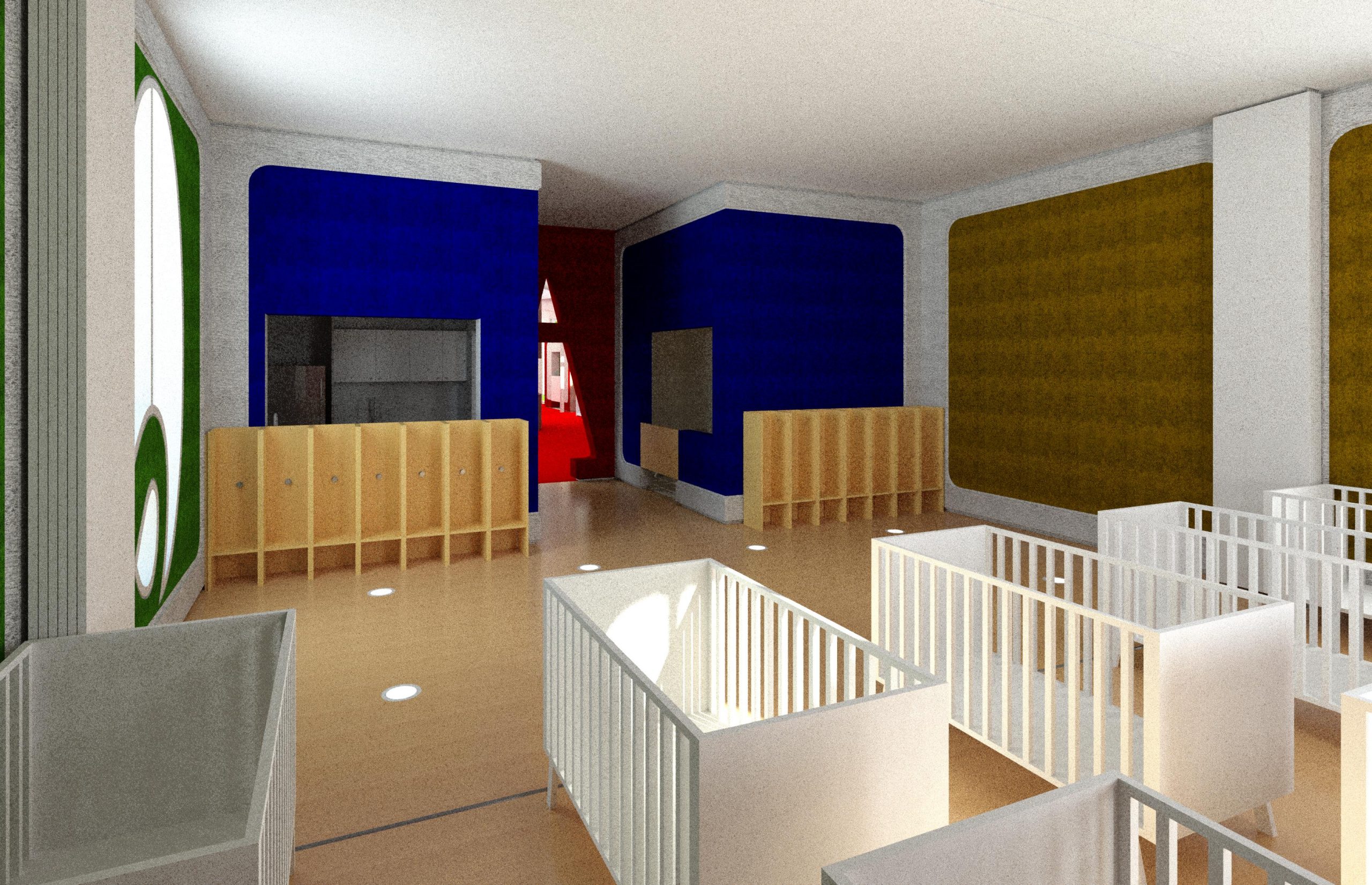
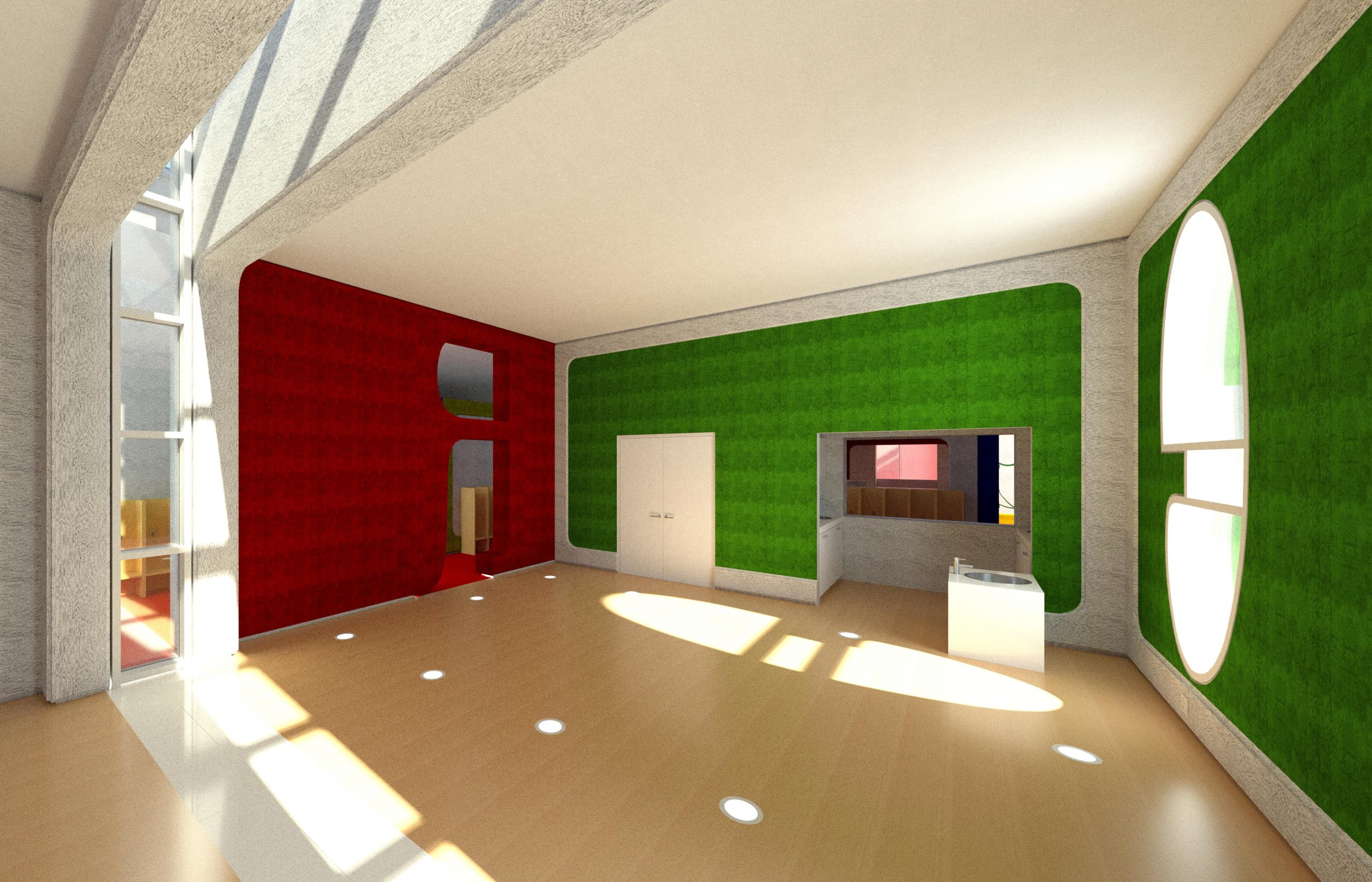
On the interior side, the blocks reverse this colour scheme, displaying the perimeter “frame” with a white “void”. The space between the “frame” and the “letter” or “number” (white on the exterior) is given a warm earth-toned colour, creating a warm, inviting atmosphere inside the building.
The colour choice for the flooring follows a similar pattern, with the village “streets” covered in bold red vinyl flooring, making it fun for children to run around on. In contrast, the classrooms where more serious learning happens are finished with wood-grain vinyl flooring, which again enhances and complements the warm, inviting colours of the walls described above.
Like the wooden toy blocks that inspired us, we have adopted their design approach by adding illustrations that appear on the blocks from time to time. However, unlike the toy blocks, whose illustrations usually feature small animals like ducks or birds, we have expanded on that idea by drawing inspiration from the wider community. Collaborating with our in-house artist, we have created illustrations that reflect local history, community interests, and folklore. As a result, if this project were built in another community with its own history, the illustrations – considered a form of “contextual child’s play” – would be re-evaluated and redesigned to hold meaningful significance for that community.
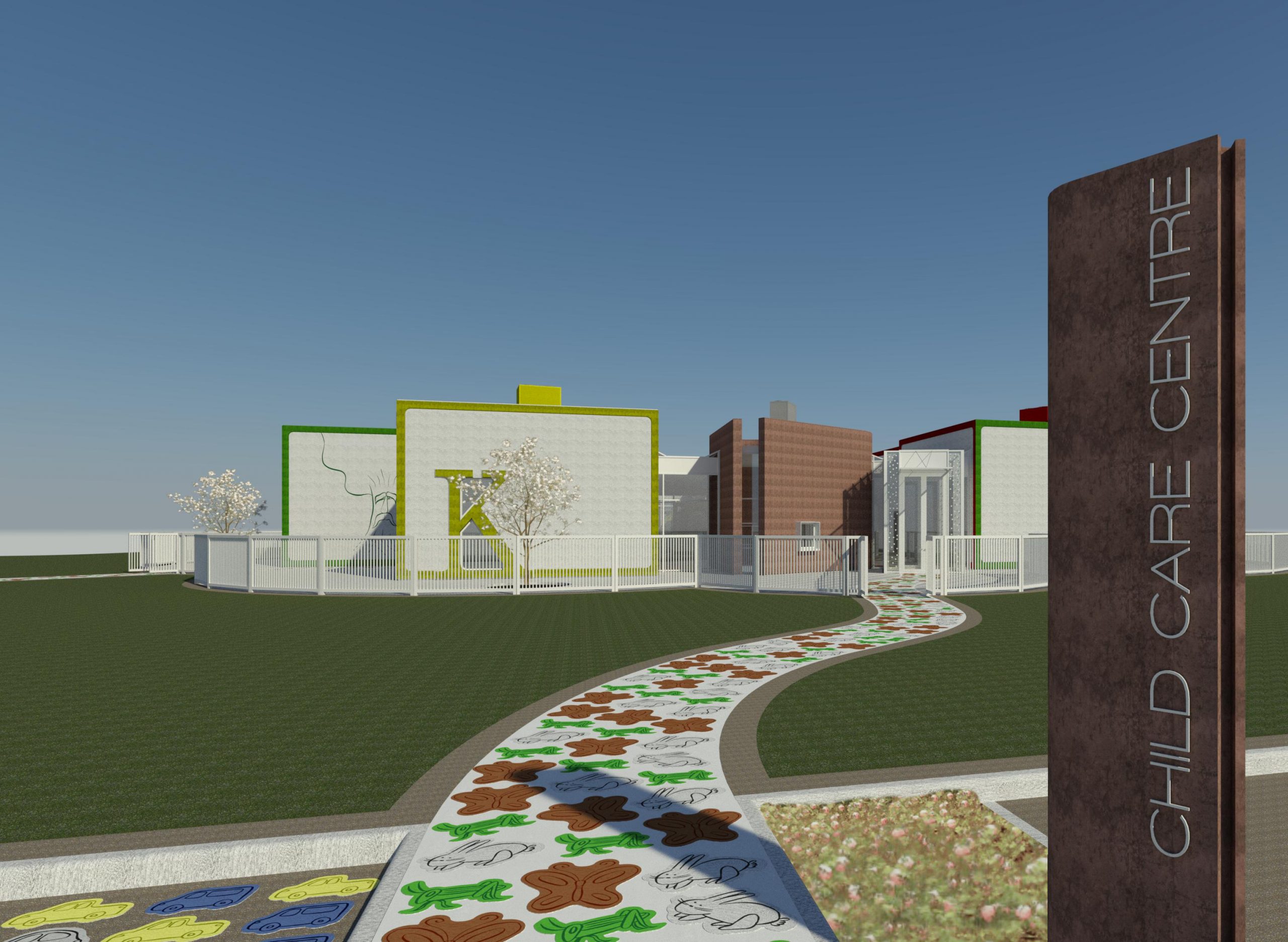
The site design for this child care centre again seeks to imbue meaning for young children. In this case, we focused on children’s paintings and the countless examples of children painting a single “flower.” Accordingly, we wrapped the child care centre with a protective white steel fence that undulates to resemble a flower’s petals. The walking surface between the fence and building is surfaced with white and light grey precast concrete pavers, maintaining the theme of “innocence” conveyed by the building’s dominant whiteness.
This entire assembly of architectural elements – which includes the precast concrete pavers and fence – is set within a large, free-flowing field of white and pink wildflowers that surrounds the architectural composition, making it hard for strangers to approach the building. Just off to the side of the child care centre, there is a free-standing garbage building, positioned within its own “flower” of ornamental grasses.
Lastly, the use of precast concrete cannot be overlooked for this project, as its versatility significantly contributes to almost every architectural element. The building blocks are all fabricated from cost-effective, highly insulated lightweight precast concrete panels, enabling quick erection due to factory off-site fabrication combined with crane-assisted assembly.
The pathway leading to the child care centre’s main entrance, along with all other pathways, is surfaced in custom-designed precast pavers. Once again, children are provided with a level of understanding, as the pathways feature three distinct precast concrete pavers: a green grasshopper, a white rabbit, and an orange butterfly – animals and insects commonly found in wildflower fields.
Building on this same concept of understanding, the “short-stay” parking spots at the edge of the property are also constructed from three different precast concrete pavers: a blue van, a grey car, and a yellow pick-up truck, the very same vehicles that these children would arrive at the child care centre in and leave from at the end of the day.
LOCATION: Various communities throughout Ontario
ARCHITECT: LINEVISION Architects
DESIGN LEADERSHIP: Michael Poitras,
Principal-in-Charge of Design
CLIENT: Various communities throughout Ontario
STATISTICS:
- No. of storeys: 1
- Total floor area:
9,300 ft2 (864 m2)
MATERIALS:
- Highly insulated, lightweight precast concrete panels
- Modified bitumen roofing (white “high emissivity”)
- Pre-finished metal fascias & flashing (high gloss white)
- Window wall windows & doors (white)
- Pre-finished aluminum skylights (white)
- Built-in millwork
- Vinyl sheet wood flooring
- Custom designed precast concrete pavers
- Precast concrete pavers (white & light grey)
- Pre-finished aluminum fencing (white)
- Outdoor landscaping
GENERAL PROGRAM:
- Infant classroom – 10 children
- Two toddler classrooms – 15 children/classroom
- Two preschool classrooms – 24 children/classroom
- Main entrance foyer
- Office
- Staff room
- Commercial kitchen
- Laundry room
- Two children’s washrooms
with small toilets & low countertops - Janitorial closet
- Outdoor garbage building
(separate building)
COST: Withheld
COMPLETION: Project